The best Tripleseat alternatives for restaurants and independent venues include Perfect Venue, Planning Pod, Caterease, EventTemple, Cvent, and HoneyBook. Tripleseat works well for larger venues and hospitality groups, but its cost and learning curve can be more than a single-location restaurant or venue actually needs.
The good news is that the event management space has grown a lot. Depending on whether you're running a restaurant with a private dining room, a dedicated event venue, a catering company, or a multi-property hotel group, there's likely a better-fit platform out there.
This guide breaks down what the top Tripleseat alternatives offer today, what they cost, and who each one is really built for so you can decide on the right event management system for your venue.
TL;DR
- Perfect Venue is the top pick for restaurants, bars, and unique venues that want an affordable, easy-to-learn platform.
- Planning Pod suits independent venues of any size that want one all-in-one subscription with no per-module fees.
- Caterease is built for catering-heavy operations.
- Event Temple is designed for hotels and multi-property hospitality groups.
- HoneyBook is a budget-friendly, general-purpose option for very small teams.
- Cvent is built for large-scale, enterprise-level event programs.
Tripleseat Overview
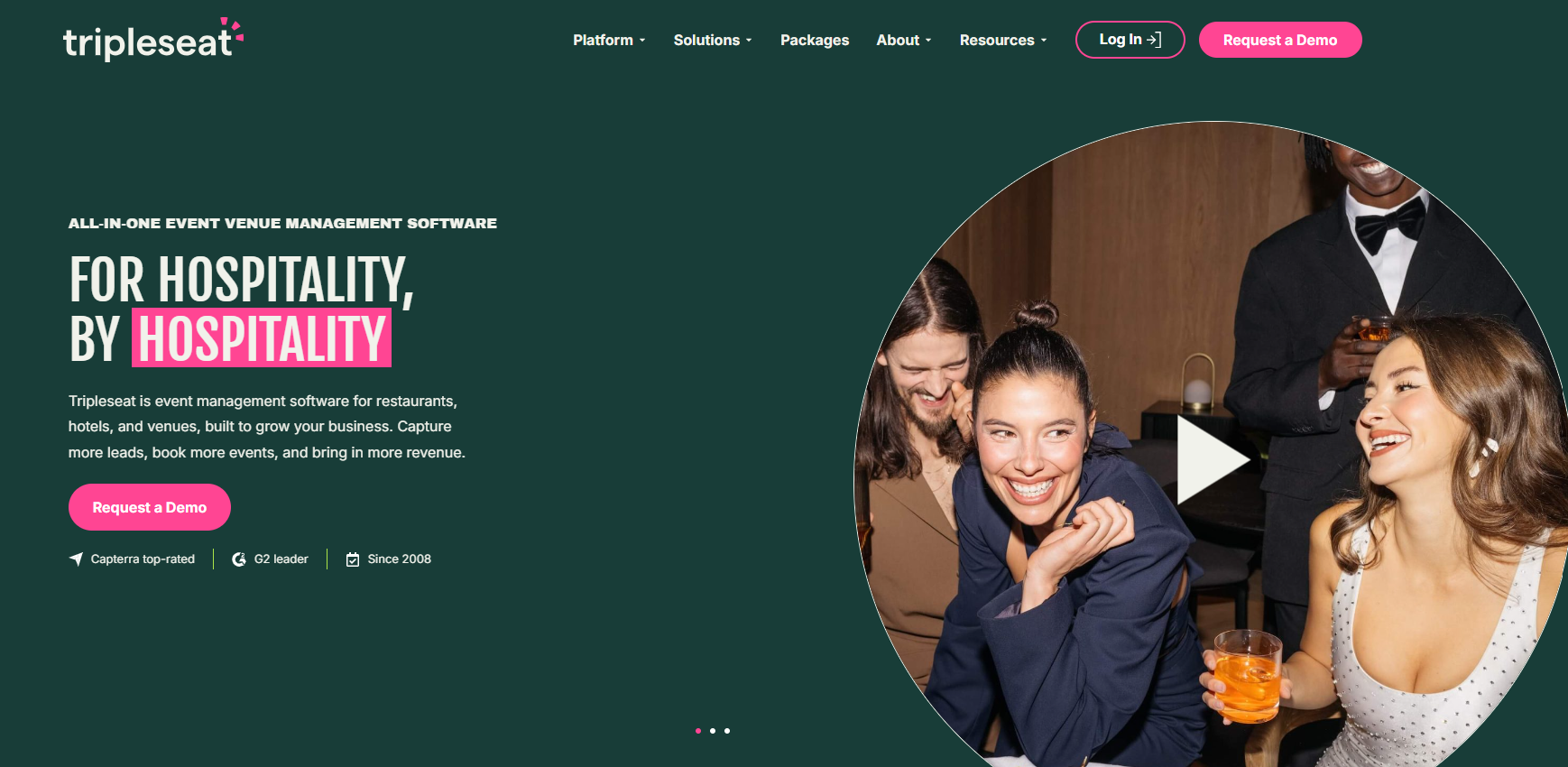
Tripleseat is an all-in-one event and venue management platform organized into a few core packages — Tripleseat, Tripleseat + Direct Book, Tripleseat + Floor Plans, and Tripleseat Hotels — plus optional add-ons for online booking, 2D/3D floor plans, a venue marketplace, reporting insights, and ticketing.
It centralizes leads, proposals, Banquet Event Orders (BEOs), contracts, payments, and client communication in a single dashboard.
What Users Like:
- An intuitive, easy-to-learn interface that new staff can pick up quickly
- One centralized hub for leads, contracts, payments, and event documents instead of juggling spreadsheets and inboxes
- Deep customization for forms, templates, and reports
- A visual calendar and task system that helps prevent double-bookings (one reviewer called the task feature "a godsend")
- Integrations with systems like Opera PMS, SevenRooms, and Stripe
- Responsive, helpful customer support
Common Limitations:
- Pricing isn't published and is quoted per demo; some reviewers report annual price increases (around 5%) plus added fees for payment processing and document services
- The built-in guest messaging feature is a recurring pain point — reviewers say emails can land in spam folders and the threading is less intuitive than a normal inbox
- A learning curve for the platform's more advanced reporting and setup, despite a friendly day-to-day interface
- Occasional document formatting glitches (line spacing, paste issues)
6 Best Tripleseat Alternatives for Restaurants and Venues
Here are six of the top alternatives to Tripleseat worth considering, based on what each event management software offers today.
1. Perfect Venue
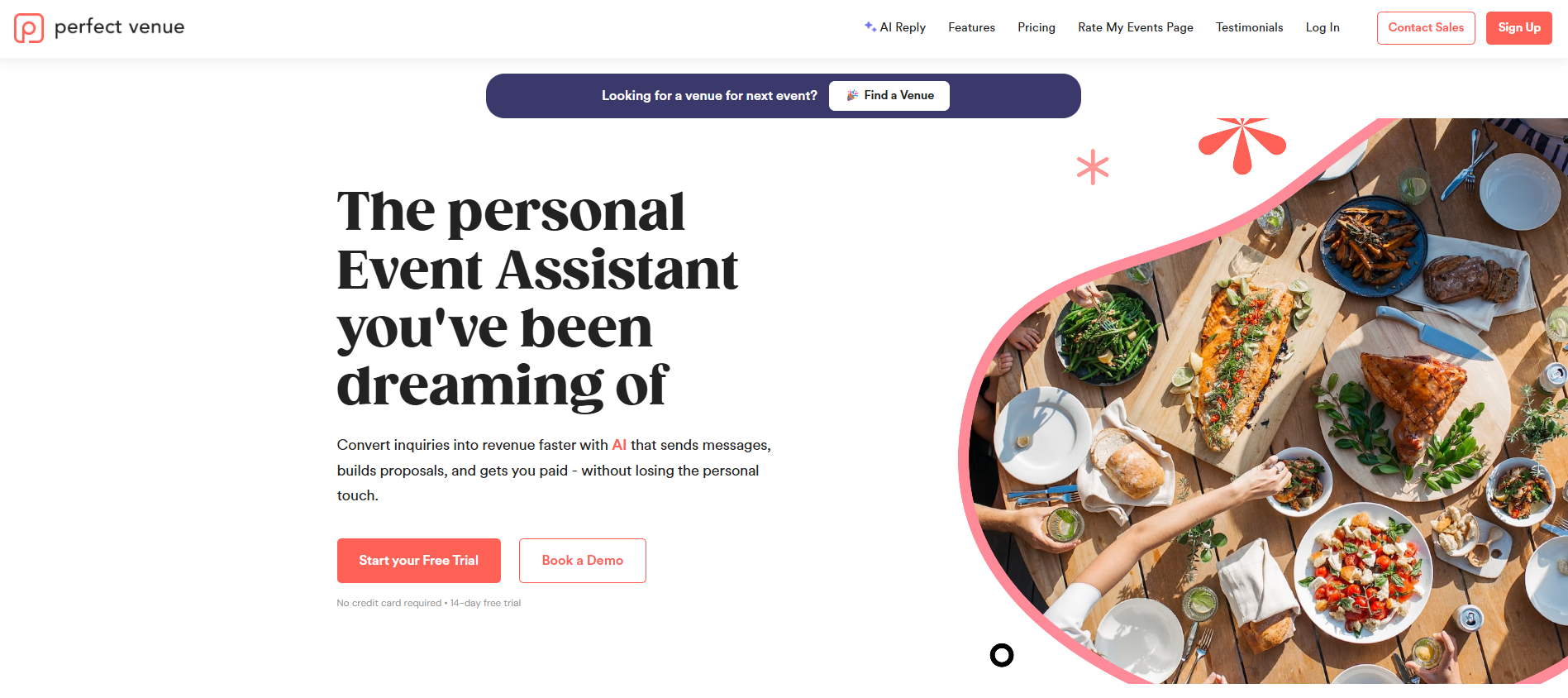
Perfect Venue is a modern, affordable alternative to Tripleseat for restaurants, hospitality groups, and one-of-a-kind venues that want a no-fuss event management solution. It's an all-in-one tool that venue owners, general managers, and event sales managers use to streamline operations, with a single dashboard for a central calendar, team tasks, analytics, payments, email threads, BEOs, and other documents.
Venues switching to Perfect Venue save about 12 hours a week and increase event sales by 40% or more on average.
Pricing starts at $199/month per location on the Professional plan, $299/month per location on Premium, and custom Enterprise pricing for multi-day events and advanced contracting needs.
All plans include a 14-day free trial with no credit card required, and card processing runs the standard 2.9% + 30¢ per transaction plus a small platform markup that shrinks as you move up plans.
Top Features
- AI Reply for faster email responses
- One-click digital proposals and automated documents (BEOs, invoices, menus)
- Central events calendar that syncs with Google Calendar
- Real-time sales and marketing analytics
- Express Book self-serve booking for guests
- Mobile app for managing events on the go
- Integrations including Gmail, Stripe, OpenTable, QuickBooks, and Google Calendar
What Users Say: Reviewers consistently call the interface intuitive, with one describing it as "dang-near foolproof."
Everything you need is in one place instead of spread across spreadsheets and email threads.
2. Planning Pod
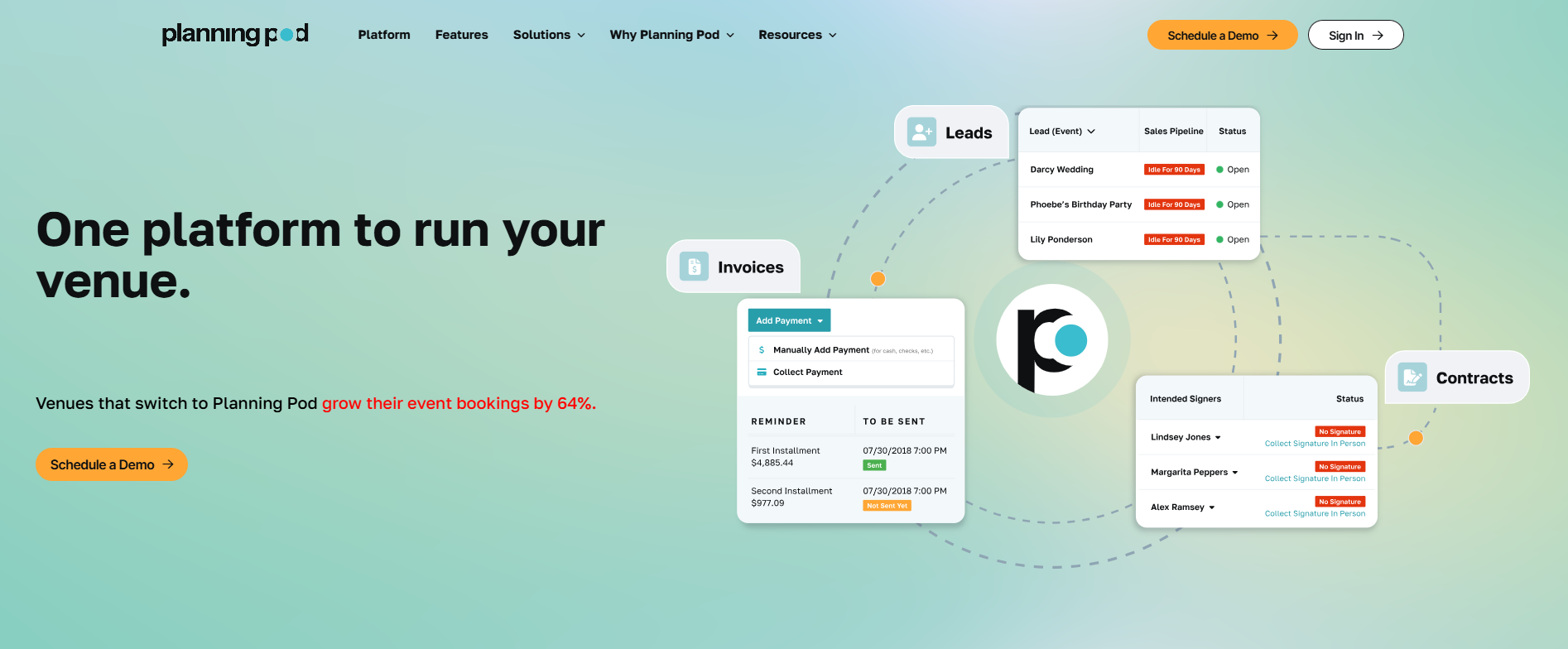
Planning Pod is an all-in-one software solution for venue management, event planning, and floor planning. It bundles 40+ tools into one platform, and specifically positions itself against Tripleseat by including floor plans, lead-capture forms, and event registration/ticketing in the base subscription rather than selling them as costly add-ons.
Planning Pod does not publish pricing on its website, so you'll need to book a demo for a custom quote.
Onboarding, data migration, and training typically get new venues up and running in weeks.
Top Features
- Event booking calendar and room/space management
- Floor plan design tool
- Event planning toolkit (timelines, guest lists, online forms, event websites)
- Centralized inbox for all email communications
- Lead and prospect CRM with customizable intake forms
- Proposals, contracts, and e-signatures
- Food and beverage / BEO management
- Invoicing, online payments, and credit card processing
- Reporting and dashboards
What Users Say: Reviewers like that it replaces several separate tools with one platform, with one catering business reporting they "doubled their volume" after switching. The most common criticism is a "clunky" interface with occasional timeouts and random logouts, plus a handful of reviews describing frustrating experiences with customer service.
Because Planning Pod doesn’t publish pricing, you’ll need to sit through a demo before you know the real cost, and with 40+ tools bundled in, it can feel like more platform than a single venue or restaurant actually needs.
See how Planning Pod compares feature-for-feature with Tripleseat.
3. Event Temple
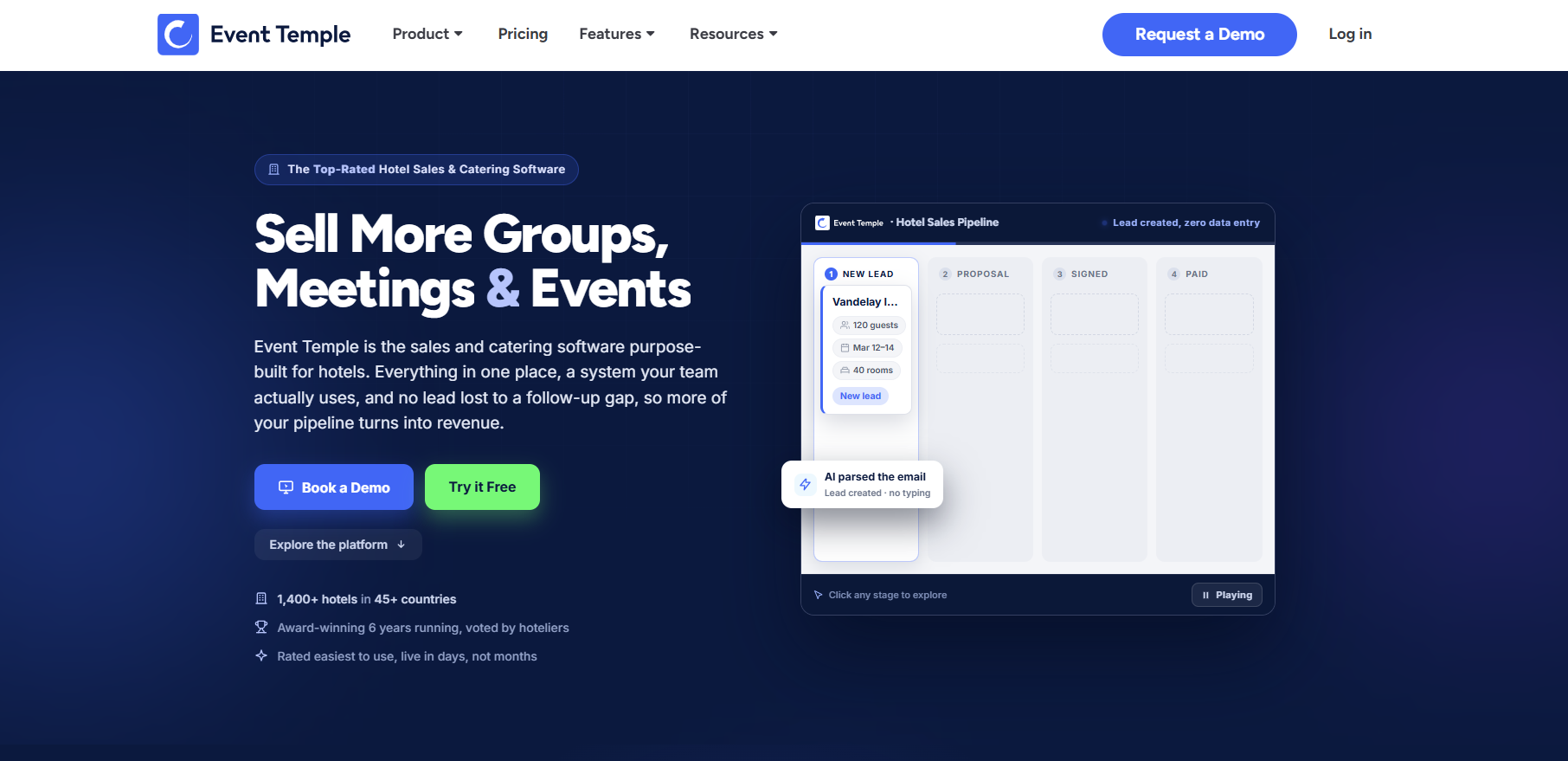
Event Temple is a sales-focused CRM and event management platform for hotels, venues, and multi-property hospitality groups. It leans heavily into group sales automation, chain-wide reporting, and pipeline management, making it a strong fit for hotel sales teams and hospitality groups managing several properties. It's less geared toward a single independent restaurant.
Pricing starts at $249/month, based on a custom quote for your needs. Plans are billed annually with a minimum one-year term, and Event Temple offers a free trial before you commit.
Top Features
- Pipeline and sales CRM built specifically for hotels
- Hotel group sales automation and real-time performance reporting
- Event management and catering/BEO tools
- E-proposals and digital documents
- Smart Mail email templates
- Digital invoicing and online payments
- Workflow automations
- Multi-property chain management from a centralized database
What Users Say: Reviewers praise the user-friendly design and support team, along with customizable BEOs and proposal tools. The most-cited drawback is limited permission controls — access is either full or view-only, with no granular roles — along with no version history on deleted documents and no automated past-due payment reminders.
Event Temple’s plans are billed annually with a minimum one-year commitment. It’s purpose-built for hotel sales teams and multi-property groups, so a single independent restaurant or standalone venue is likely to find it more platform, and more commitment, than necessary.
4. HoneyBook
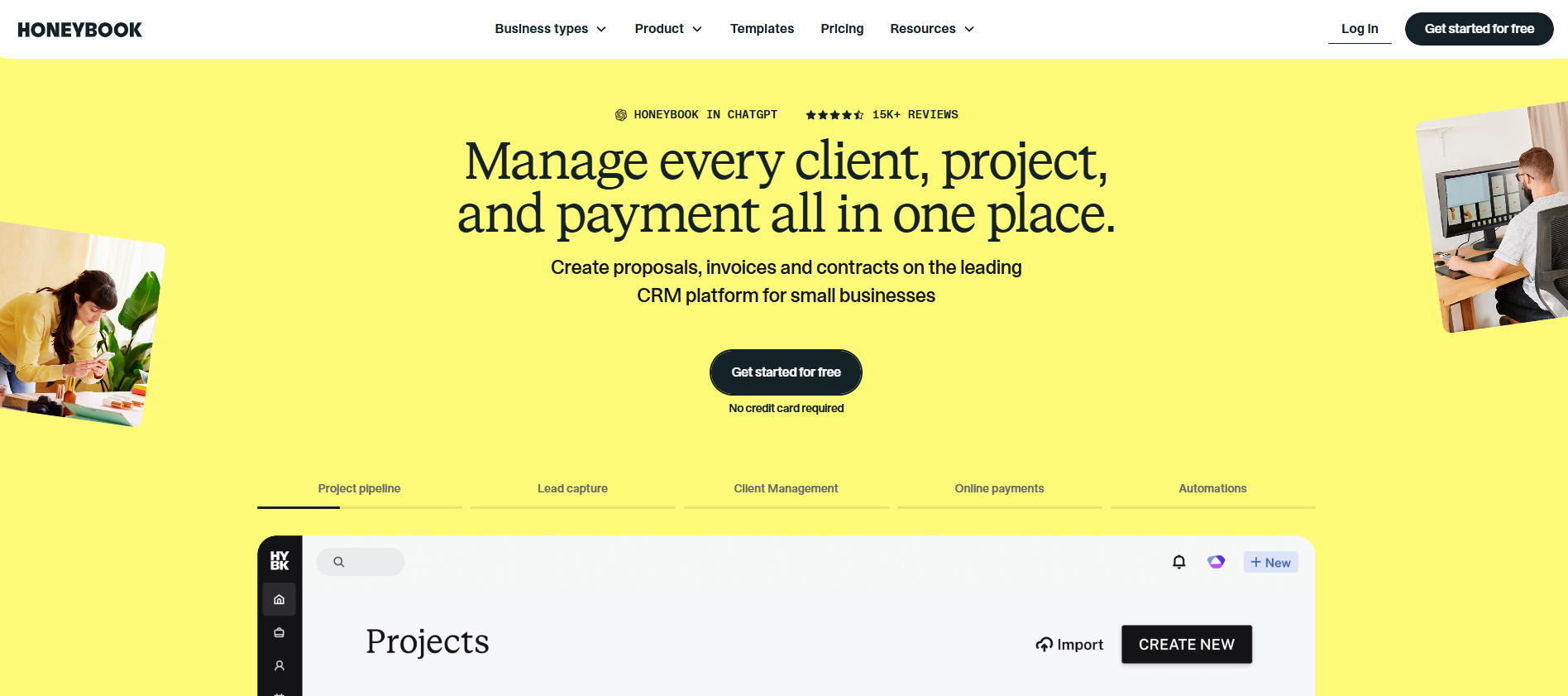
HoneyBook is a general-purpose client relationship and business management platform, not a purpose-built event or venue management tool. That said, it lists venues as one of its core business types, and it's a reasonable lower-cost option for very small teams that mainly need CRM, proposals, contracts, invoicing, and payments in one place. HoneyBook has also added a Prismm integration for 2D/3D event floor plans.
Plans start at $29/month for Starter, $49/month for Essentials, and $109/month for Premium (billed yearly), all backed by a 30-day free trial with no credit card required.
Top Features
- CRM with customizable pipeline and lead forms
- Proposals, contracts, and e-signatures
- Invoicing, online payments, and payment plans
- Scheduling and automated meeting reminders
- Automations for repetitive tasks
- HoneyBook AI (chat, automations builder, email drafts, meeting notes)
- Floor plans via Prismm integration
What Users Say: Reviewers like consolidating their business into one tool, especially the invoicing/payment features and templates. The most common complaints are payment processing fees and instant-pay deductions, a weaker mobile app than desktop, and occasional sync issues with Google Calendar and Outlook.
HoneyBook isn’t purpose-built for venues. Floor plans depend on a separate Prismm integration rather than being native, and it lacks dedicated BEO and event-day tools. It’s a solid fit for a very small team that mainly needs CRM and invoicing, but venues managing multiple events and locations will likely outgrow it quickly.
5. Caterease
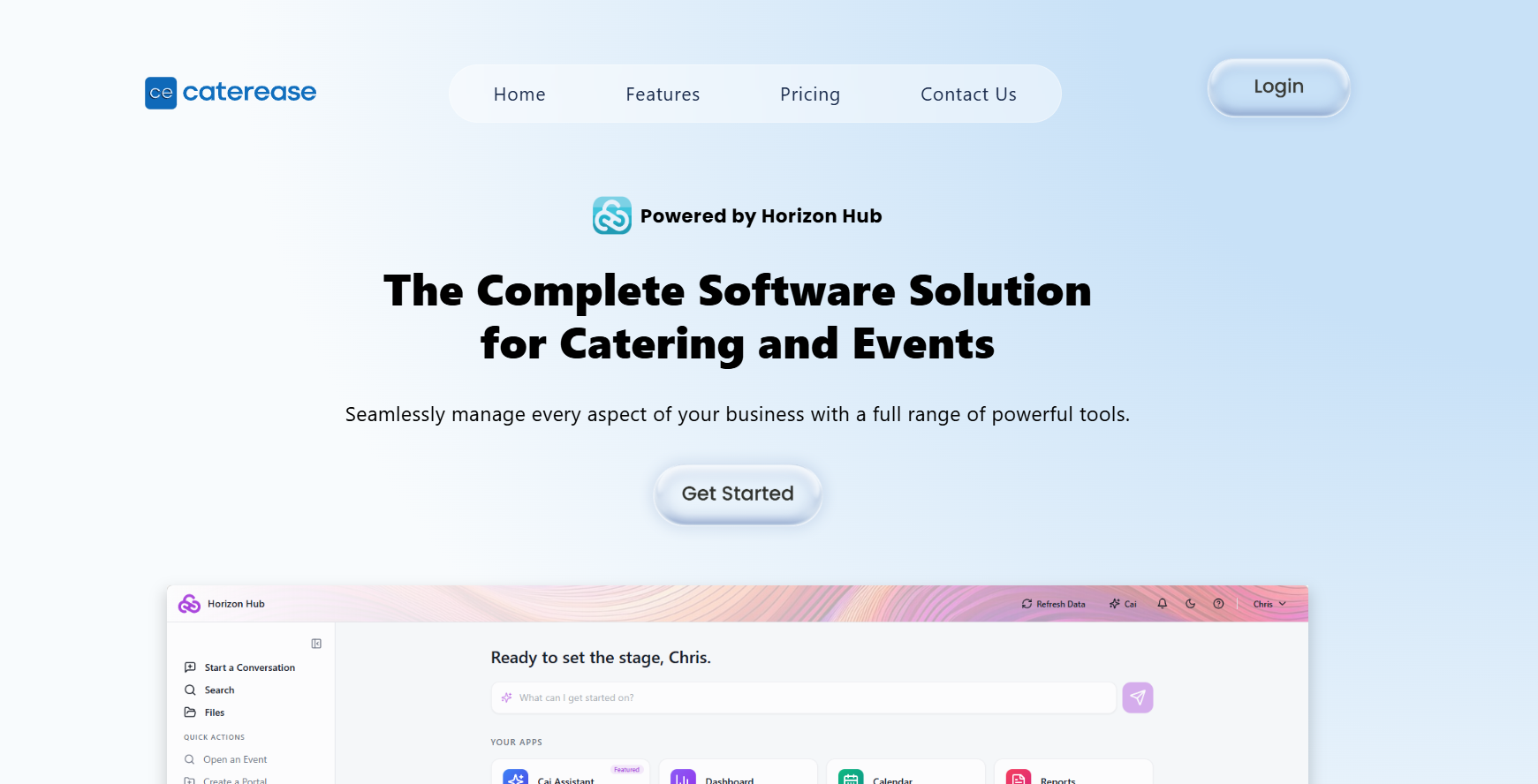
Caterease has been substantially modernized since it first launched, and now runs on an AI-driven hub called Horizon, with a built-in assistant (Cai) for pulling up events, clients, and reports on request. It remains especially strong for the "kitchen side" of events: detailed menus and recipes, staff scheduling, and automatic packing lists.
Pricing starts at $99/month for the Express plan, $149/month for Standard, and $199/month for Professional (all billed annually), plus $28/month per additional user. There's a one-time launch fee of $200 per user, and optional add-on modules and integrations (like Guest Rooms Manager, Prospect Manager, and Document Builder) run $25/month each. All plans include Mosaic payment processing, though processing fees apply.
Top Features
- AI-driven Horizon Hub with the Cai assistant
- Dynamic, wizard-driven event booking
- Detailed menu and recipe management
- Staff shift scheduling and automatic packing lists
- Client event portals and e-signatures
- Kitchen display for live order tracking
- Smart reporting and business metrics
What Users Say: Reviewers value having all event, client, and staff data centralized, along with strong reporting for forecasting. The most common criticisms include a dated interface, slow load times, and a steep setup learning curve.
Caterease is designed for catering operations specifically, so restaurants, bars, and unique venues without a heavy catering component may find its kitchen- and menu-focused tools less relevant. Costs can also climb quickly past the base plan, with a $200 one-time launch fee per user and $28/month for each additional user.
6. Cvent
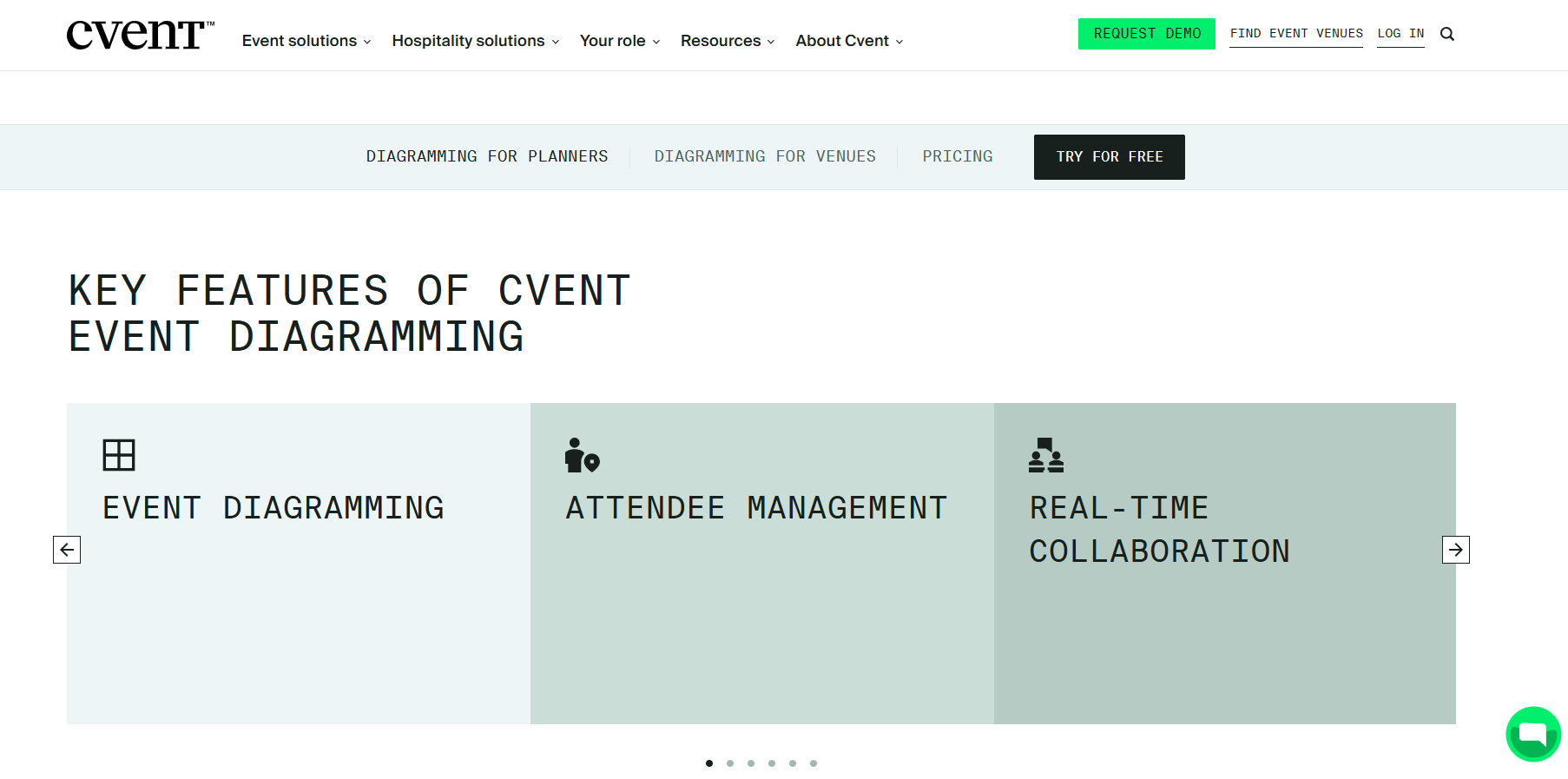
Cvent is an enterprise-grade event platform used to manage more than 8 million events for over 34,000 customers globally. Its hospitality marketplace also sources more than 300,000 unique RFPs a year, connecting hotels and venues with corporate and group business.
For most independent restaurants or single-location venues, Cvent is likely more than you need. It's best suited to large hotels, convention centers, and hospitality groups managing high volumes of group business, or corporate and marketing teams running large-scale event programs.
Cvent doesn't publish pricing; it's sold on a custom enterprise-quote basis.
Top Features
- AI-powered platform (CventIQ) spanning sourcing through ROI reporting
- Large-scale venue sourcing marketplace for group and RFP business
- Event registration and management tools for any event format
- Enterprise reporting and analytics
- Extensive integration ecosystem
What Users Say: Reviewers praise the platform's depth for managing large conferences and attendee logistics, along with reliable support. The most common complaints are cost (frequently described as "expensive," particularly for smaller organizations), a steeper learning curve than the marketing suggests, and occasional friction with registration, invoicing, and third-party integrations.
Like Tripleseat, Cvent doesn’t publish pricing, and its custom enterprise quotes typically make it the most expensive platform on this list. It’s built for large hotels, convention centers, and enterprise event teams managing high-volume programs, so a single restaurant or independent venue will likely find it far more platform, complexity, and cost than necessary.
How to Choose the Right Tripleseat Alternative
The right alternative is the one that matches four things: what it costs, how well it flexes to your workflow, how it connects with the tools you already use, and how fast your team can actually learn it.
7 in 10 restaurants in the US are single-unit operations, and 9 in 10 have fewer than 50 employees. That's exactly the kind of business that ends up paying for chain-scale features it'll never touch.
Use the four criteria below once you've got a shortlist.
Affordability and Cost-Effectiveness
Look for a platform with clear, published pricing you can evaluate before you talk to sales. Event management software pricing varies more than people expect between vendors, so pay attention to what's actually included at each tier. Some platforms charge extra for payment processing, floor plans, or additional users, while others bundle everything into one subscription.
Versatility and Customization
Your venue's workflow probably looks nothing like a hotel's or a caterer's. The right platform should flex to your event types, policies, and F&B minimums, rather than forcing you into a process built for a different kind of business.
Integration with Existing Systems
Check that a platform connects with the tools you already rely on, like Google Calendar, Gmail, QuickBooks, and your payment processor. A strong CRM for events keeps leads and bookings in one place instead of scattered across inboxes and spreadsheets.
User-Friendly Interface
A tool your whole team can pick up in a day or two, with little to no formal training, gets adopted faster and causes less frustration than one that needs a lengthy onboarding process. It's the same logic the U.S. Small Business Administration gives for evaluating any business software: a tool nobody opens isn't saving anyone anything.
The Bottom Line
Whether you're running in-person events at a restaurant, a dedicated venue, a catering company, or a hotel, there's a platform on this list built for you. The right choice comes down to your business type, budget, and how much of the platform you'll actually use. Tripleseat isn't the answer for everyone.
If you want to see whether Perfect Venue's event management platform is the right fit for your restaurant or venue, you can start a 14-day free trial today.
Frequently Asked Questions
How much does Tripleseat cost per month?
Tripleseat doesn't publish pricing publicly. Costs are based on a custom quote you get after requesting a demo, and depend on your package (Tripleseat, +Direct Book, +Floor Plans, or Hotels), any add-ons (Floor Plans, Direct Book, Venue Marketplace, Insights, Tickets), and your number of locations.
Who are Tripleseat's competitors?
Tripleseat's main competitors are Perfect Venue, Planning Pod, Caterease, Event Temple, HoneyBook, and Cvent. Which one actually competes with it depends on what you run: Perfect Venue and Planning Pod compete for restaurants and independent venues, Event Temple and Cvent compete for hotels and large-scale event programs, and Caterease and HoneyBook compete more on the catering and small-team side.
What's the difference between Tripleseat and Planning Pod?
The main difference is how each platform bundles its tools. Tripleseat sells its core package plus paid add-ons for things like floor plans, direct booking, and ticketing, while Planning Pod folds more than 40 tools, including floor plans and event registration, into one subscription. Planning Pod's all-in-one structure tends to suit independent venues that want fewer bolt-on fees, while Tripleseat's package system fits venues that only need a subset of what it offers.
What are the key differences between Tripleseat and Perfect Venue?
The biggest differences are who each platform is built for and how they price. Tripleseat is designed for larger venues and hospitality chains, and its cost is quoted per demo rather than published, with some reviewers reporting annual price increases and added fees for payment processing and document services.
Perfect Venue is built for restaurants, bars, and independent hospitality groups, with published pricing starting at $199/month per location and a 14-day free trial. Perfect Venue also includes features like AI-assisted email replies and self-serve guest booking aimed at smaller teams running events without a lot of admin support, while Tripleseat's guest messaging and advanced reporting setup carry more of a learning curve.
Is Tripleseat considered a CRM?
Not exactly. Tripleseat includes lead and contact management as part of its event sales workflow, but it's built around managing the full event lifecycle (leads, proposals, BEOs, and payments) rather than functioning as a general-purpose sales CRM like Salesforce or HubSpot.
Is there a cheaper alternative to Tripleseat?
Yes. Since Tripleseat's pricing is quote-based and generally scaled for larger operations, several alternatives publish transparent, lower starting prices: HoneyBook starts at $29/month, Caterease starts at $99/month, and Perfect Venue starts at $199/month per location.
What is the best Tripleseat alternative for restaurants?
If you run a restaurant, Perfect Venue is usually your best bet. We built our Event Management Software specifically for restaurants, bars, and hospitality groups running private dining and buyouts, so our pricing and features are sized for a single location or small group, not an enterprise hotel chain. That means you get exactly what you need to run great events, without paying for tools built for a much bigger operation.